FEEB
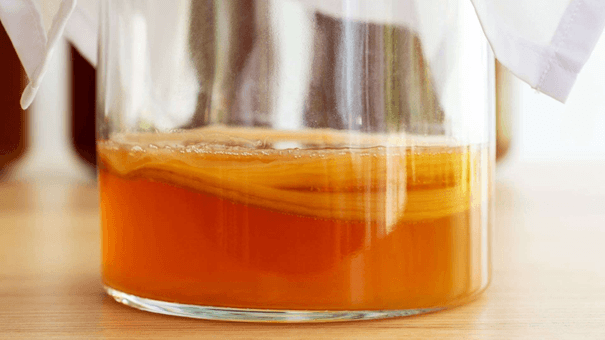

This project starts from material exploration rather than form or application. The focus is on understanding what a material does, how it behaves, and what kind of experiences it can create. We discovered that freeze-dried bacterial cellulose has an appearance and texture similar to styrofoam, lightweight, fragile, and unexpectedly tactile, a quality that has not been extensively explored in design contexts.


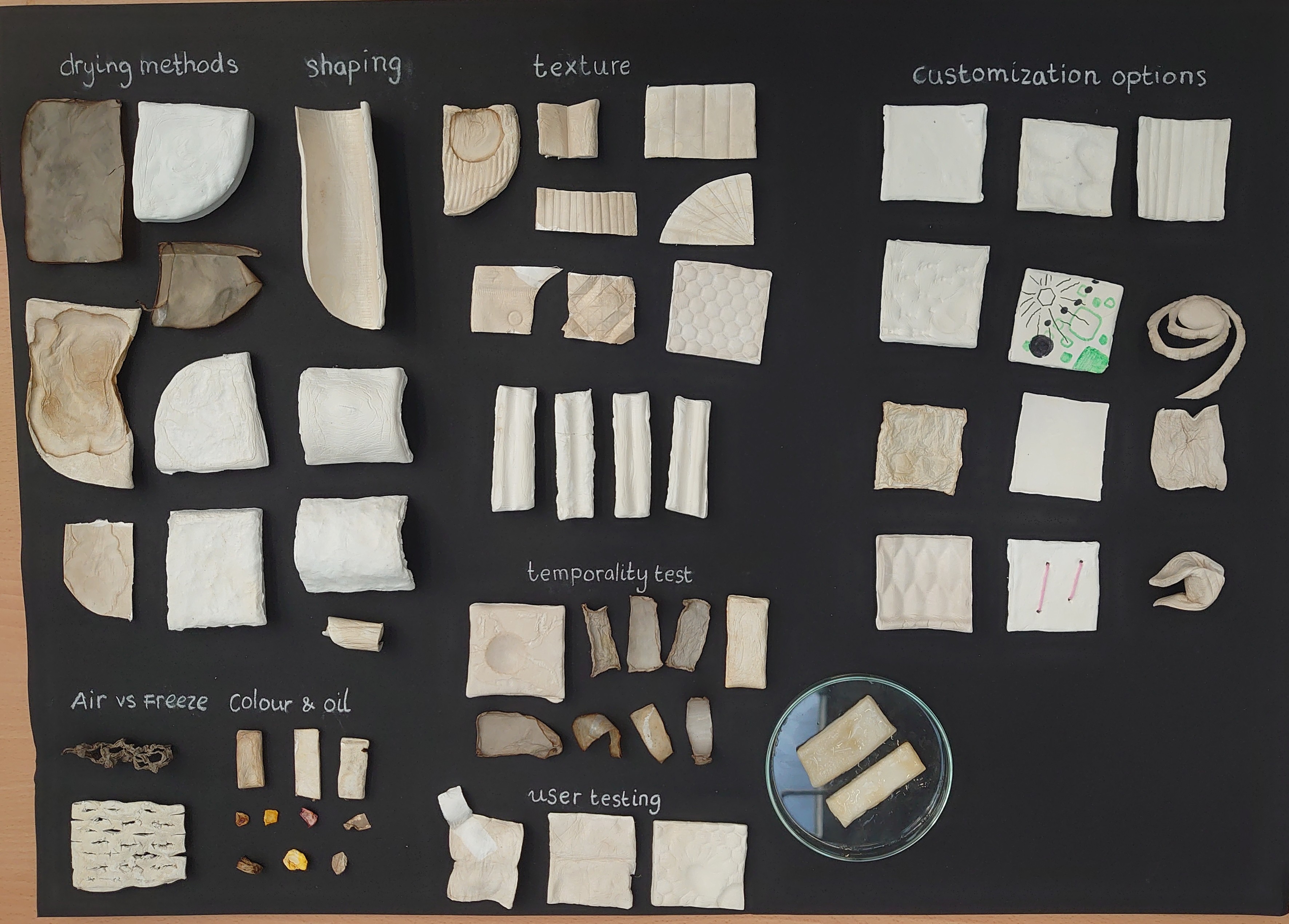
Using a Material Driven Design approach, the material was studied through technical, experiential, and formal dimensions. This led to a detailed material description and a set of potential directions for application, grounded in its physical behaviour rather than predefined use cases. Result | unique property When pressed, it creates a soft, slightly resistant collapse similar to the satisfying sensation of popping bubble wrap. A tactile response that sits between structure and release. The exploration combined hands-on tinkering with structured material research. Early stages focused on wide exploration: testing, breaking, folding, compressing, and observing. Over time, the process narrowed toward identifying specific material qualities worth amplifying. User testing played an important role in understanding perception beyond language. The material was explored not only for its performance, but also for its sensorial, emotional, and interpretive qualities. Because these reactions are often difficult to articulate, a booklet was designed with guided exercises to help users express subtle, intuitive responses.
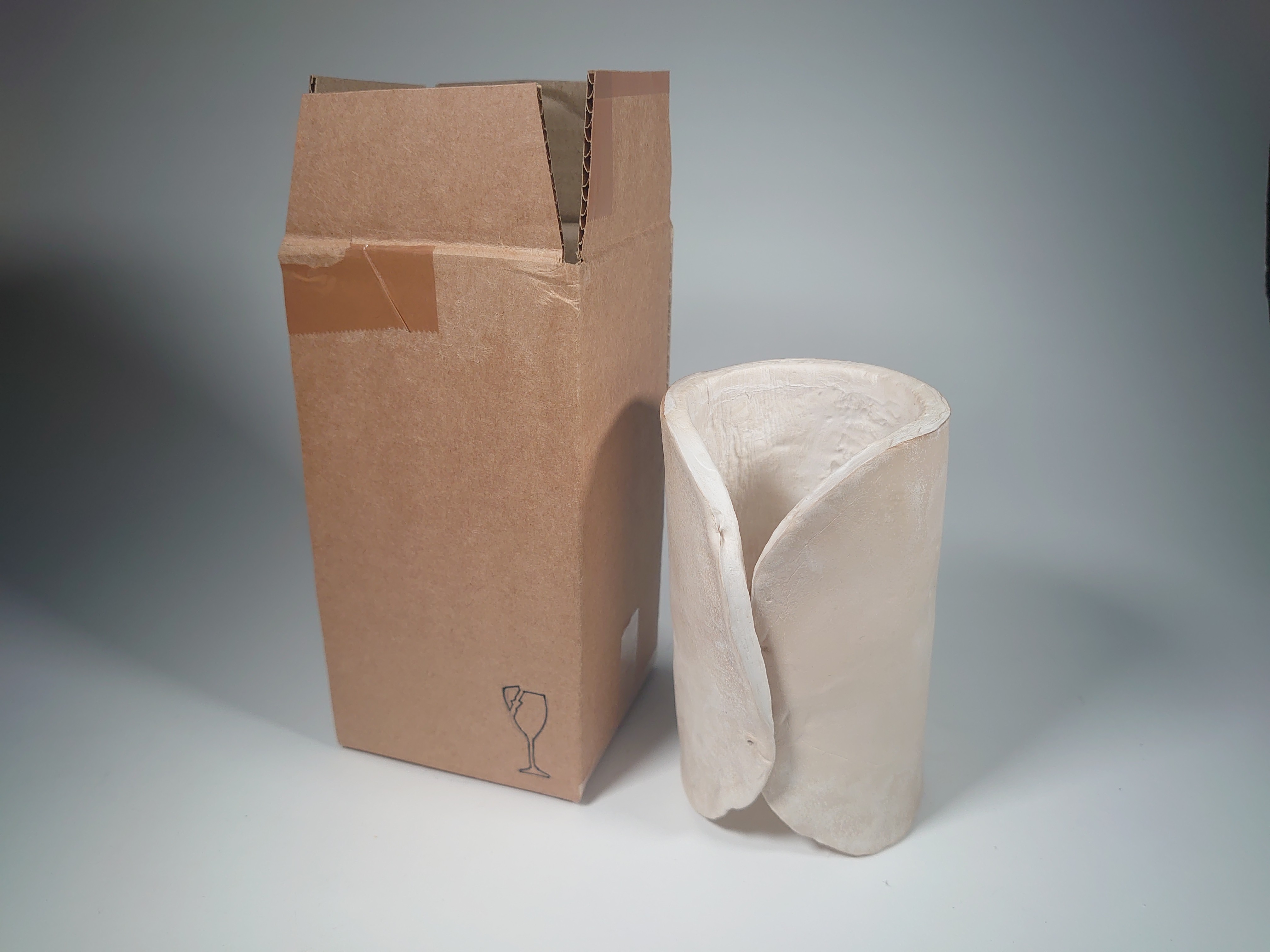
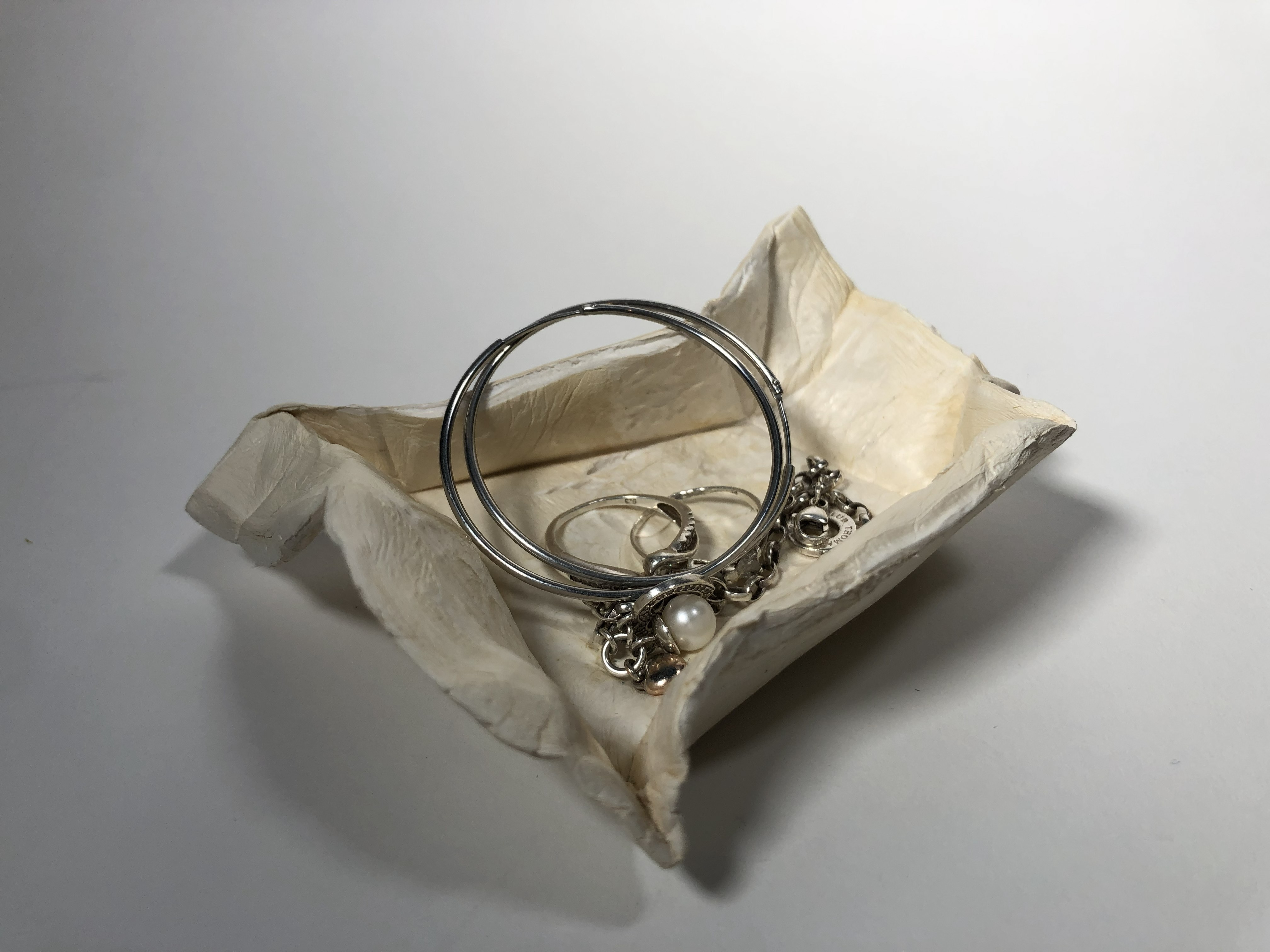
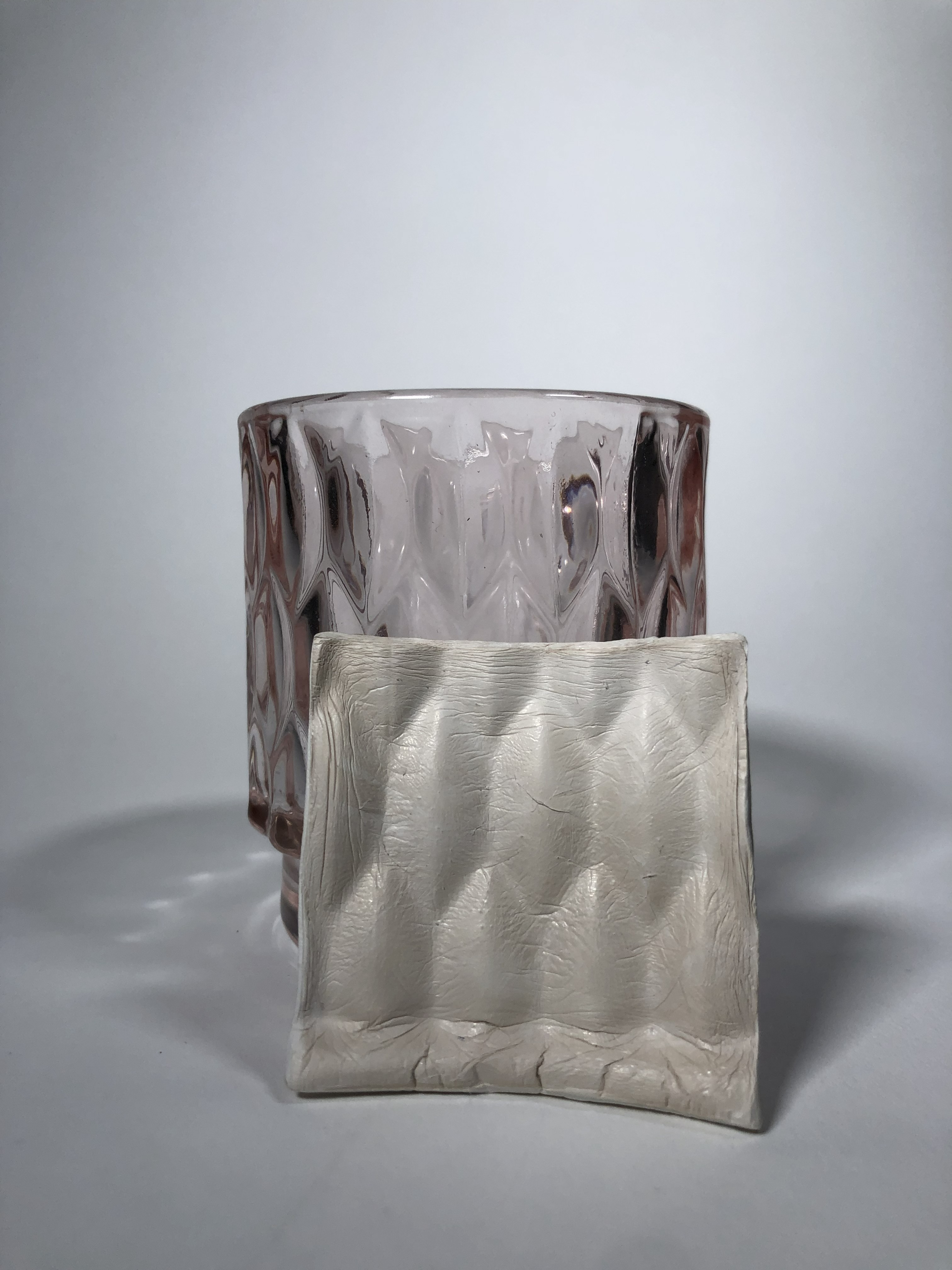
FEEB. Biobased packaging material system From this research, a new direction emerges: FEEB, a biobased packaging material designed to be part of the product experience itself. Instead of separating packaging from object, FEEB acts as a formable interface between user and product. It can be folded, shaped, and imprinted by hand or by the object it contains. Think of a foldable jewellery box, or a glass coaster formed directly through touch, where the user’s fingers, pressure, or the object itself leaves a permanent imprint. Packaging becomes temporary structure and lasting trace at the same time. Not discarded after use, but transformed through use.
Team
S Bhamidi, HW Herremans & S Rijcks
Category
Material Driven Design
Timeline
Feb 2024 - June 2025