Sensit Neo Reusable biosensor.


In today’s healthcare and research environments, wearable biosensors are often designed as fully disposable systems. Especially in lab settings and short-cycle clinical testing, such as glucose monitoring trials for diabetic patients, entire devices are discarded after minimal use. This creates massive amounts of electronic waste in a sector that is rapidly scaling up digital health and continuous monitoring. SENSIT NEO proposes a different logic: not everything needs to be single-use. The concept separates the system into two parts: a long-life sensing and interaction core, and a minimal, disposable skin interface. The reusable unit is designed to last up to 10 years, while only a thin, low-material patch is replaced per use. This shift dramatically reduces material consumption and is especially impactful in high-frequency testing environments, where waste accumulates fastest.


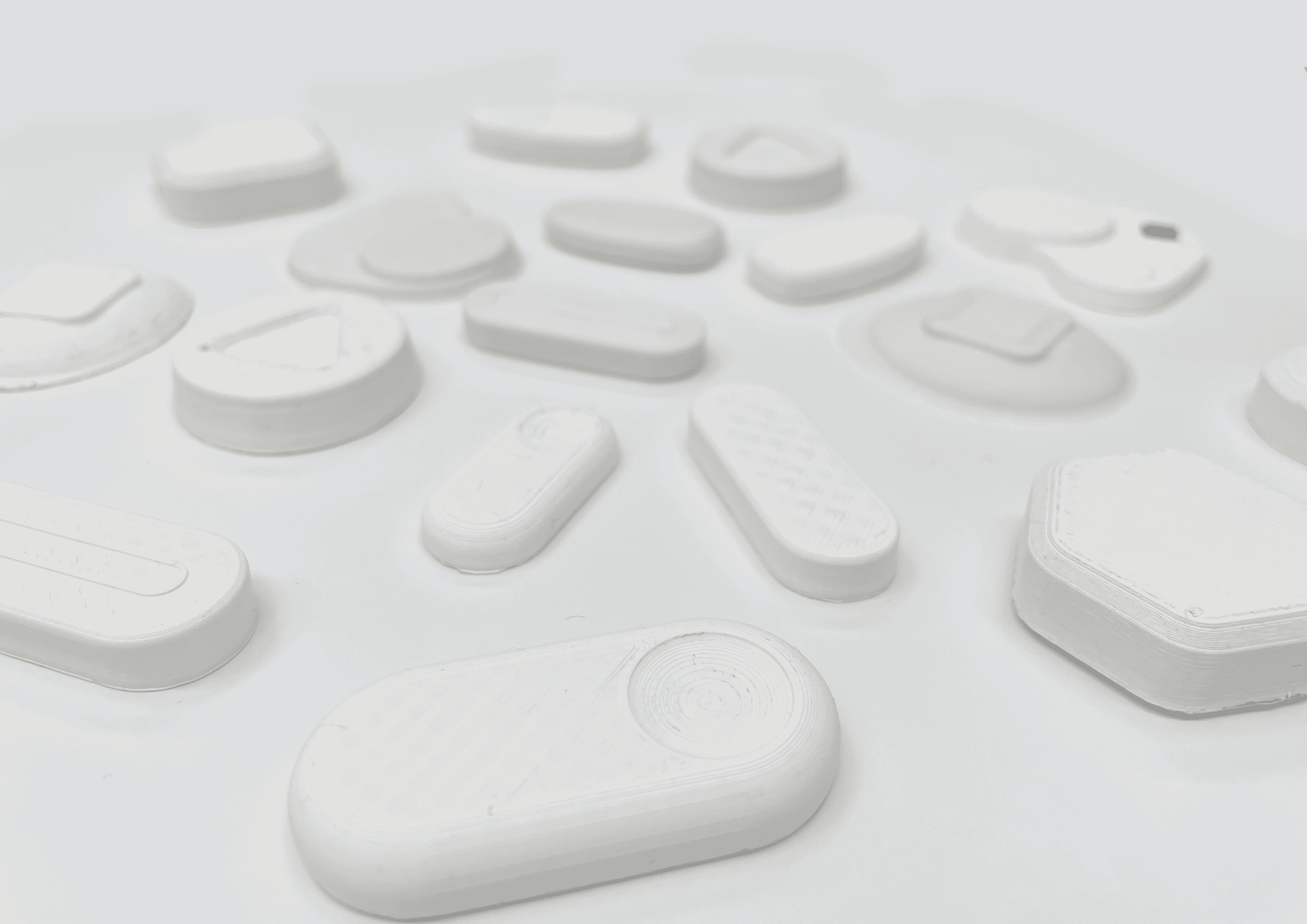
During this project, we improved the interaction, form, and sustainability of the wearable. I used collages, sketches, and iterative 3D-printed prototypes to create a compact design that integrates all components while following the natural shape of the body. For interaction, I mapped the user journey, created functional diagrams, and tested interactive mock-ups of lights and buttons with diabetic patients. The final design includes a dedicated on/off toggle, haptic feedback in the top button, and Bluetooth control via smartphone, making the sensor intuitive and easy to operate.
I conducted a Life Cycle Assessment to inform sustainable design choices. The final design has a 30% smaller footprint than the original Sensit Wearable. It is also 97% smaller than conventional devices. During this project, I gained experience balancingstakeholder expectations and presenting design decisions with confidence.


Team
J Koorevaar, HW Herremans, E van Hees, R Ramesh, E Driehuis & M Borrego
Category
Medisign / Design for Sustainability
Timeline
Feb 2024 – June 2024